
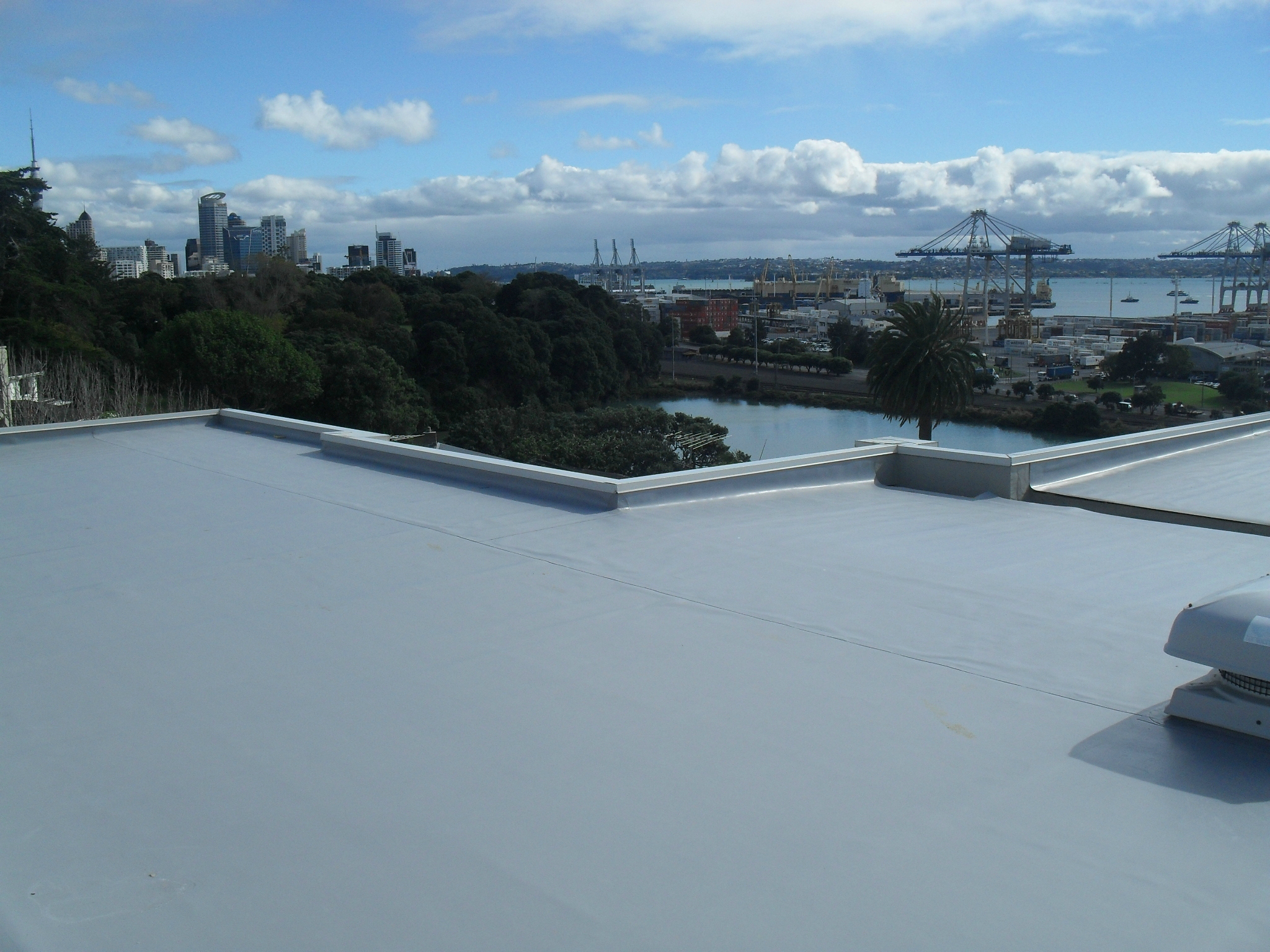
A small roof with outsized consequences
A bank branch usually has one of the smaller flat roofs we work on, and one of the lowest tolerances for getting it wrong. Under that modest footprint sit a vault, a server room, and a customer floor where a single ceiling stain on a Monday morning reads as neglect to every depositor who walks in. The roof is also highly visible, branches are built on prominent corners precisely so people can see them, so the roofline, the edge metal, and the parapet have to stay clean and intact, not just watertight. We scope a financial building around that combination of small area, high stakes below, and constant public visibility above.
Fort Myers carries a deep roster of these buildings. National branches and regional credit unions line the Cleveland Avenue and US 41 corridors, the River District downtown holds older financial offices among the restaurants and galleries of the city's historic core, and the Gateway and Cape Coral growth areas keep adding branches as rooftops fill in. They run the range from a single drive-up branch to a multi-story financial office, but nearly all of them put sensitive, business-critical space directly under the membrane.
The drive-through canopy is the leak you'll actually get
If a bank roof leaks, the odds are it starts at the drive-through canopy. That canopy is a separate little roof cantilevered off the main building, and the flashing where it ties into the wall lives a hard life: full sun and thermal cycling all day, vehicle exhaust and the occasional sprinkler or wash overspray, and differential movement between a light canopy structure and the heavy building it hangs off of. Standard retail flashing details aren't built for that, so we pull the canopy-to-wall transition out as its own scope item, evaluate it independently, and re-detail it for the movement it actually sees rather than burying it under new field membrane and calling it done.
More penetrations than the footprint suggests
Bank roofs look simple from the parking lot and rarely are. A typical branch packs ATM kiosk enclosures, the drive-up canopy tie-in, a generator with rooftop exhaust for the transfer switch, and precision cooling units protecting the server and network room, each one a curb and a flashing detail crowded onto a small roof. We inventory every penetration before pricing so none of them becomes the surprise that opens up after the warranty starts. The cooling units over the server room get particular attention, because a condensate line that drips onto the membrane or a curb that sits too low turns a routine HVAC nuisance into water over the one room a bank can least afford to flood.
Small high-visibility roofs reward a longer-lived system
Because a branch roof is small, the cost difference between an adequate system and a durable one is modest in absolute dollars, while the cost of a failure, closing a customer floor, drying out a server room, is steep. On Fort Myers branches that sit in full sun along Cleveland Avenue and US 41, we lean toward a reflective membrane and robust edge metal rated for our coastal wind zone, both to extend service life on a roof that bakes all summer and to keep the highly visible roofline crisp on a building the public is meant to notice.
Security shapes the schedule and the crew
No other common building type controls roof access the way a financial building does. Contractor badging, escorts near vault-adjacent areas, and camera documentation of crew activity are routine at bank-owned properties here. We build the credentialing timeline and any escort requirements into the bid up front, identify vault and server locations from the drawings before mobilizing, and confirm with the security team that no active vault operation is disturbed by vibration or temporary access changes. None of that arrives as a change order after the contract is signed.
Working around banking hours
Branches run Monday through Saturday with a steady flow of customers and staff, so we concentrate tear-off and active installation in off-hours and weekends and confirm watertight dry-in before the doors open each morning. Noise near the customer floor and teller line is held down during service hours, and the branch manager and corporate facilities contact get the work-window plan, the daily reports, and the dry-in confirmations as we go.
Portfolio account or community bank, same documentation
Many institutions here run multiple branches under a corporate real-estate group with preferred-vendor programs and standardized scope and pricing frameworks; others are community banks or credit unions managing one or two buildings directly. We work inside the vendor-management and approval process for portfolio accounts and just as readily one-on-one with a local institution. Either way the closeout is the same: insurance and license verification before mobilization, a pre-construction safety plan, daily work and dry-in reports, the manufacturer warranty registered in the owner's name, and the final permit and inspection package, with a single project-management contact for multi-site programs.
Bank & Financial Building Roofing Questions
How do you schedule around banking hours?
Tear-off and active installation are concentrated in off-hours and on weekends, with watertight dry-in confirmed before the branch opens each morning. We coordinate work windows, noise limits during customer-service hours, and any security escort requirements with the branch manager and corporate facilities team.
Why is the drive-through canopy treated separately?
The canopy-to-wall transition is the most common chronic leak on a bank because it endures thermal cycling, vehicle and wash overspray, and differential movement between the light canopy and the heavy building. We evaluate it as its own item and re-detail it for that movement rather than rolling it into the field membrane, which never fixes it on its own.
Can you work over an active vault or server room?
Yes. We identify vault and server-room locations from the drawings before mobilizing, sequence those roof zones during approved windows, and confirm with the security team that no active operation is affected by vibration or temporary access changes during the work.
What documentation do financial institutions require?
Typically insurance certificates and license verification before mobilization, a pre-construction safety plan, daily work and dry-in reports, the manufacturer warranty registered in the owner's name, and a final permit and inspection package. We provide all of it and work within each institution's approved-contractor process.
Do you handle multi-site bank roofing programs?
Yes. We provide standardized scoping, documentation, and pricing across a portfolio of branches with a single project-management contact for the corporate facilities team, and work just as readily with a community bank or credit union managing an individual property.