
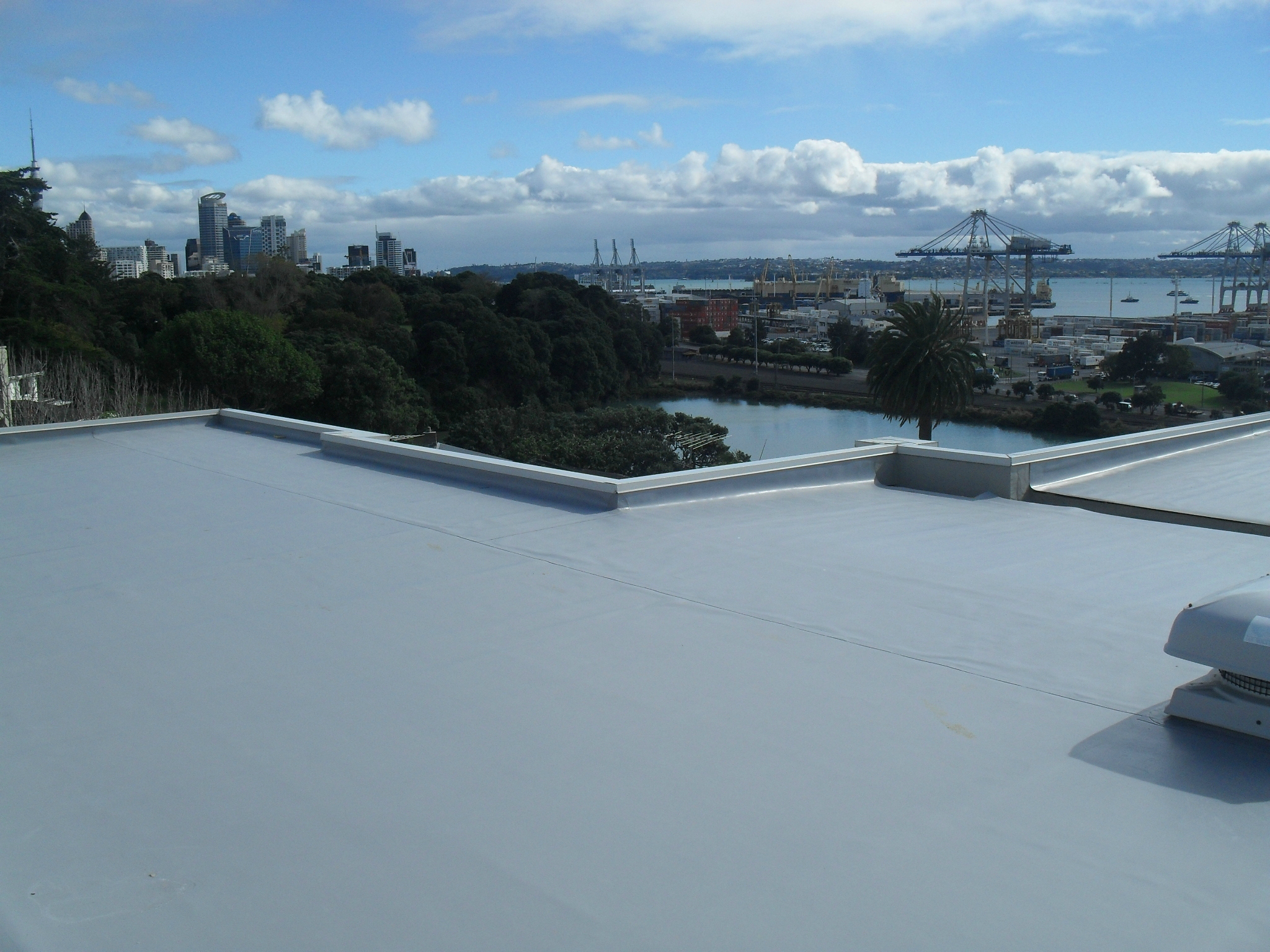
One building, several roofs, several owners' problems
A mixed-use development is never a single roof. It is a stack of uses, ground-floor retail, residential or office above, sometimes a structured parking podium tucked into the base, and each layer has its own occupancy, its own mechanical load, and its own way of failing if the waterproofing is wrong. The redevelopment underway in the downtown River District and the newer ground-up projects rising along the US 41 corridors have brought a wave of these buildings to Fort Myers, and most of them put a leasable apartment or a paying retail tenant directly under a horizontal surface someone has to keep dry. That changes how we scope, sequence, and warranty the work.
Lee County's growth pressure is the demand driver here. As Fort Myers has pushed density into its urban core instead of only sprawling outward toward Gateway and the Treeline Avenue corridor, developers have stacked uses vertically, and the roof plan on those projects has to be read in section, not in plan. The leasing-up retail at grade and the residents on the top floor are relying on assemblies that look similar from the street but behave completely differently.
A podium deck is not a roof, and treating it like one fails fast
The most expensive mistake on a Fort Myers mixed-use building is specifying a standard roofing membrane on a podium deck. The slab between grade-level parking or retail and the residential floors above is occupiable, planted, and walked on, which means it needs a traffic-bearing waterproofing assembly: a membrane built for structural deflection and constant hydrostatic load, drainage composite, root barrier under any landscaped courtyard, and a protection layer beneath the wearing surface. A field membrane meant to shed rain and carry a maintenance worker will not survive planters, pavers, and foot traffic, and when it leaks it leaks into a unit, not an attic. We carry that distinction through the whole scope.
The upper roofs carry the residential and amenity loads
Above the occupied floors, the work shifts again. Residential mixed-use towers bring parapet drainage, mechanical-penthouse flash-throughs, elevator overrun enclosures, and rooftop amenity decks where residents lounge directly over finished apartments. Those amenity decks get the same traffic-bearing assembly logic as the podium, coordinated with whoever installs the deck finish. The field roof areas around them get our standard low-slope system detailed for the dense, varied penetrations these mixed-use mechanical layouts always generate.
Warranty coordination is the part everyone underestimates
When one building has a field membrane, a podium waterproofing assembly, and an amenity-deck system, it can easily carry three separate warranties with three separate inspection requirements and three different parties who could be blamed at a leak. We map that out before installation so the manufacturer approvals, mock-ups, and registrations line up and there is a clear, documented boundary between assemblies. A developer or condo association should never be stuck refereeing a finger-pointing match between trades two years after closeout. The transition lines where the field roof meets the podium edge, where the amenity-deck waterproofing turns up a parapet, and where one tenant's roof area abuts another's are the joints that decide whether those warranties hold, so we detail and document them as deliberately as the field areas themselves.
Retail and residential roof areas don't drain the same
The combined roof areas on a Fort Myers mixed-use building rarely share a drainage scheme. The grade-level retail box wants fast positive drainage off a broad low-slope plane, the residential roof above carries parapet scuppers and overflow provisions sized for our intense summer downpours, and the podium or courtyard collects water around planters and paving that has to be carried away without backing up against the waterproofing. Treating those as one drainage problem is how ponding shows up over a leased storefront. We design the drainage zone by zone so each use sheds water on its own terms.
Phasing over occupied retail and residents
Mixed-use roofing in the Fort Myers core almost always happens over a live building. Retail stays open, residents stay home, and downtown noise and access constraints shape the working hours. We build a phasing plan that protects tenant access, contains noise, dust, and vibration over occupied space, and confirms watertight dry-in in writing at the end of every workday. Crews coordinate elevator and common-area use with building management so the project doesn't bleed into residents' daily lives.
Working inside the development team
On these projects we work alongside the general contractor, the MEP subs, the structural engineer, and the building-envelope consultant at the same time, inside the submittal and quality-control framework the owner set. Mock-up testing, flood testing where specified, and rep inspections at the critical phases are part of the process, not an interruption to it. The deliverable is a building where every horizontal surface, retail roof, podium, amenity deck, tower roof, is dry, documented, and warranted to a known party.
Mixed-Use Development Roofing Questions
What is the difference between the roof and the podium waterproofing?
A roof membrane sheds water and carries occasional maintenance traffic. A podium deck is occupiable and often planted, so it needs a traffic-bearing waterproofing assembly built for structural deflection, constant hydrostatic load, root intrusion, and pedestrian or vehicle traffic. Using a roofing membrane on a podium or plaza deck is the wrong specification and typically fails within a few years, leaking directly into the space below.
How do you keep the work from disrupting retail tenants and residents?
We develop a phasing plan before mobilizing that protects tenant and resident access, contains noise, dust, and vibration over occupied areas, and coordinates elevator and common-area use with building management. Watertight dry-in is confirmed in writing at the end of each workday so no occupied space is ever left exposed.
Can you handle rooftop amenity decks?
Yes. Amenity decks sit over occupied units, so they get a traffic-bearing waterproofing assembly under the finish surface rather than a standard roofing membrane. We specify, install, and warranty that assembly in coordination with the deck-finish contractor and the structural engineer of record.
How are the different warranties on one building managed?
A mixed-use building can carry separate warranties for the field roof, the podium, and the amenity deck. We coordinate the manufacturer approvals, mock-ups, and registrations up front and document the boundaries between assemblies so there is a clear, accountable party for every surface and no finger-pointing at a future leak.
Do you work within a developer's submittal and QC process?
Yes. We work inside the project's submittal and quality-control framework alongside the general contractor, MEP subs, structural engineer, and envelope consultant, including mock-up testing, flood testing where specified, and manufacturer rep inspections at critical phases through closeout.