
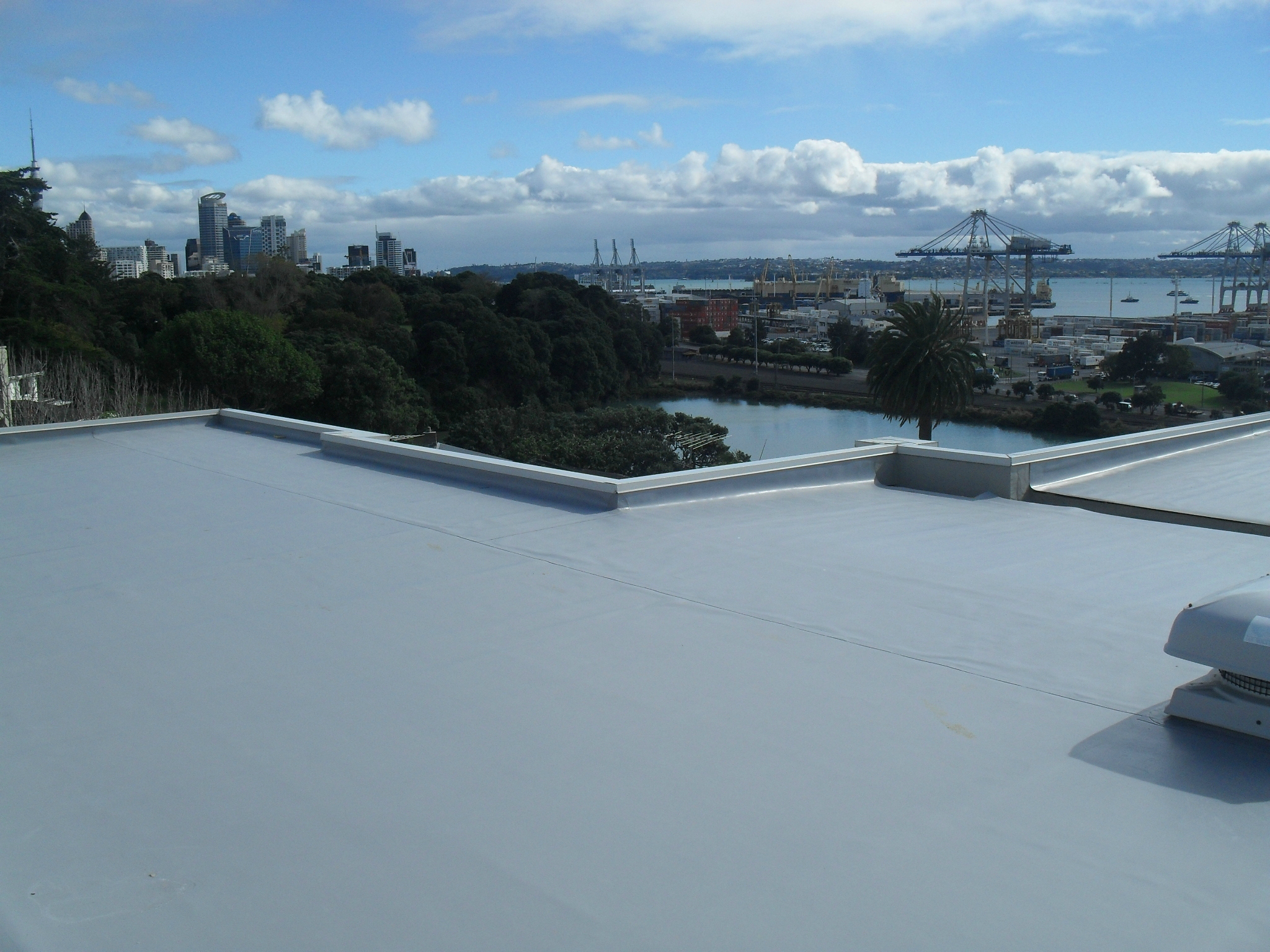
The auditorium is one giant column-free box, and the roof has to span it
What makes a cinema roof different from a strip-center roof is what is missing underneath it: columns. Each auditorium is a wide, clear-span room, and a stadium-seating multiplex stacks eight, twelve, sixteen, or more of those boxes side by side, with spans that can reach 80 to 150 feet across a single bay. That geometry creates deflection behavior that a fastening pattern borrowed from a retail building cannot handle. We specify cinema roofing attachment and insulation around the actual deck type and span we measure on your building, not off a generic template.
Fort Myers has real cinema inventory to work with. The market is driven by large-format multiplexes like the 20-screen house at the Bell Tower Shops near the US 41 crossroads and the multi-screen complex at Gulf Coast Town Center off Alico Road and I-75, alongside smaller and independent screening venues. Each one is a big, low-slope deck packed with rooftop equipment, sitting in a climate that hammers a flat roof with daily summer storms and relentless sun.
A penetration cluster that rivals a hospital
Cinema roofs are crowded. Every auditorium wants its own dedicated HVAC, often a rooftop unit per screen sized for a packed house on opening weekend. Add concession exhaust, lobby make-up air, boiler or heater vents, and condensers for the walk-in coolers behind the food service, and the penetration density above a typical multiplex starts to look like a data center or a hospital. Before any new membrane goes down, we inventory and individually flash every curb, duct, and conduit run, because in this climate the leaks almost always start at a tired penetration, not out in the open field.
Sound, insulation, and a quiet house
A theater roof does acoustic work that other roofs never have to. The assembly is part of how the building keeps rain noise off the soundtrack and keeps one auditorium's low end from bleeding into the next. Tear-off and recover decisions have to respect that. We core the existing assembly to confirm insulation layers, moisture content, and total weight in place before recommending a recover or a full replacement, and we keep the acoustic and thermal performance of the assembly intact through the work so a rebuilt roof does not turn into a noise complaint.
Big spans, real decks, real attachment
- Steel deck. Common over auditorium framing and able to take mechanical attachment directly, but the fastener pattern and pull-out values depend on rib depth and gauge. Older short-rib deck pulls out at lower values than modern three-inch rib, so we verify before we spec.
- Concrete deck. Calls for adhered or, where structure allows, ballasted systems rather than blanket mechanical attachment.
- Deflection-sensitive spans. On the widest bays we may move to an adhered or hybrid system to avoid concentrating point loads from fasteners at the seams.
Drainage on a big flat roof in storm country
A multiplex roof is a large, nearly flat field, and in this climate that is a recipe for ponding unless the drainage is designed for the volume Southwest Florida storms deliver. Afternoon downpours here can drop an inch of rain in a hurry, and a flat cinema roof with undersized or clogged drains will hold that water over the auditoriums for days. We design tapered insulation to move water positively to the drains, size primary and overflow drainage for the local rainfall intensity, and add overflow scuppers where the existing system has no secondary path. Standing water over a darkened auditorium is not just a membrane-life problem; it is added dead load on a long-span deck that was never meant to carry a pond, which is exactly why we treat drainage as a structural concern and not just a roofing one.
Working around the show schedule
Cinemas run from early afternoon to late at night, seven days a week, which makes them act like a 24-hour building for scheduling purposes. We sequence tear-off and dry-in so every section is watertight before the evening screenings begin, and we coordinate any HVAC shutdown needed for curb or penetration work with your facilities team during off-hours. We also treat the marquee and entry-canopy connections as their own flashing items, because those penetrations and the canopy-to-building joints are the chronic leak source on older theaters in this market. After Hurricane Ian, we document edge metal and attachment to current wind requirements as part of the job, so the roof over a full house holds through storm season.
Movie Theater Roofing Questions
What membrane do you typically specify for a multiplex roof?
60-mil or 80-mil TPO mechanically attached over tapered polyiso is the common cinema spec here. Tapered insulation corrects the drainage dead spots that build up on flat theater roofs over decades, and white TPO meets the cool-roof energy requirements most jurisdictions now apply to reroof permits. We add reinforced walkway pads around rooftop HVAC to protect the membrane from service traffic.
How do you handle the long-span auditorium decks?
Wide steel-deck spans need fastener patterns and pull-out testing matched to the rib depth and gauge, so we verify the deck before specifying attachment. Where deflection is a concern on the widest bays, we may use an adhered or hybrid system to keep fastener point loads off the seams.
Can you work without interrupting screenings?
Yes. We plan around the screening schedule, sequence tear-off and dry-in so each section is watertight before evening shows, and coordinate any required HVAC shutdown for curb or penetration work during off-hours with your facilities team.
How do you price a cinema reroof?
Pricing is per roof square based on membrane spec, the condition of the existing assembly, penetration density, and access. Most multiplex reroofs include tapered insulation design, which adds cost but meaningfully extends membrane life by ending the ponding. We provide fixed-price proposals after a roof walk and core review.
Do you handle the marquee and entry canopy connections?
Yes. Marquee and canopy supports that penetrate the membrane are individual flashing items in the scope, and the canopy-to-building transitions are a frequent leak source on older theaters, so we evaluate and re-flash them on every cinema project here.