Fort Myers sits in Lee County at the southwestern tip of the Florida Peninsula, and the government buildings serving this region occupy one of the most challenging coastal roofing environments in the United States. The City of Fort Myers City Hall on Jackson Street, the Lee County Justice Center and Historic Courthouse complex on Monroe Street, the Fort Myers Police Department, the Fort Myers Fire Department's network of stations, and the Lee County Public Library system all require roofing systems calibrated for Southwest Florida's combination of intense tropical heat, seasonal hurricane exposure, and the brackish air that moves inland from the Caloosahatchee River estuary. Hurricane Ian's catastrophic landfall in September 2022 near Fort Myers Beach produced wind speeds and storm surge that caused billions of dollars in damage across Lee County, and its aftermath has fundamentally reshaped how both the city and the county approach municipal roofing investment and specification.
Florida Chapter 255 and municipal procurement ordinances govern public construction contracts in Fort Myers, with the city's Procurement Services Office handling solicitations for city-owned facilities and Lee County's Procurement Management Division overseeing county-owned building work. Both entities publish solicitations through DemandStar and post notices to their respective government websites. Following Hurricane Ian, Lee County activated emergency procurement procedures under Florida Statute 252.36 for immediate hurricane recovery work, but the longer-term re-roofing of county buildings returned to competitive bidding procedures as the emergency declaration wound down. Florida law requires public construction performance and payment bonds for contracts above established thresholds, and the active post-Ian reconstruction environment has placed significant demands on surety capacity in Southwest Florida as contractors work simultaneously on public and private recovery projects.
The 2022 Hurricane Ian experience transformed how Fort Myers and Lee County specify roofing systems on public buildings. The storm demonstrated that facilities in FEMA Flood Zone AE and the Coastal Construction Control Line were vulnerable not only to direct wind damage but to rain intrusion through compromised flashing details during the extended high-wind periods that accompany major landfalling storms. The city's post-Ian damage assessments identified specific failure modes, unseated metal edge systems, torn perimeter flashings, and fastener pullout in older mechanically attached systems, that the revised roofing specifications directly address. Current bid documents for Lee County and City of Fort Myers re-roofing projects specify enhanced perimeter attachment, tested metal edge systems rated for the regional design wind speeds under FM 4435/4474, and redundant drainage provisions sized for extreme rainfall events rather than typical design storms.
Fort Myers and Lee County have several historically significant civic buildings that require preservation-sensitive treatment. The original Classical Revival courthouse building is listed on the National Register of Historic Places and anchors a courthouse complex that has expanded around it. Re-roofing work on the historic courthouse requires coordination with the Florida Division of Historical Resources when state preservation funds are involved, and the Lee County Historic Preservation Board maintains design review authority over designated local landmarks. The original courthouse features a distinctive hip roof with clay barrel tile over a wood structural system that requires careful assessment of structural adequacy before any additional insulation or ballast is specified in the re-roofing scope. Preservation contractors with experience on comparable Florida civic buildings must demonstrate familiarity with the Florida Building Code's provisions for historic structures, which allow alternative compliance pathways for preservation work that would otherwise violate modern code requirements.
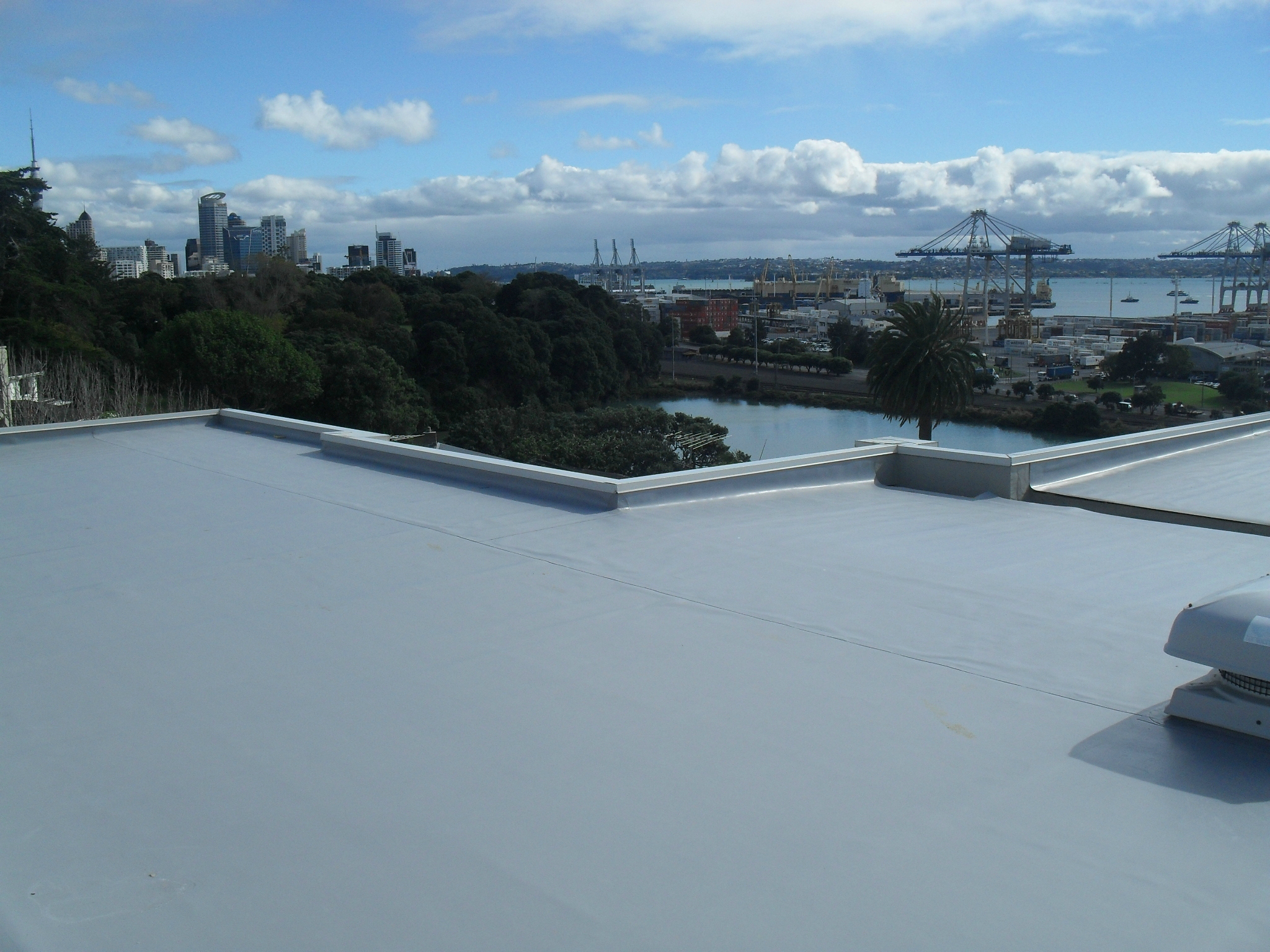
Energy efficiency in Fort Myers municipal roofing is driven by Florida's Energy Conservation Code and by the practical reality that cooling costs represent a dominant operating expense for public buildings in a climate with minimal heating requirements. Cool-roof membrane systems with high solar reflectance index values reduce mechanical cooling loads on flat-roofed city buildings throughout the year, and the payback period for the incremental cost of high-reflectance products over standard dark membranes is exceptionally short at Fort Myers latitudes. The Lee County Electric Cooperative and FPL commercial energy efficiency programs both offer incentives for qualifying cool-roof installations on commercial and institutional buildings, and the city's capital projects staff has incorporated these incentive structures into the financial analyses that justify premium material specifications on public re-roofing projects.
Fort Myers Fire-Rescue stations face the same post-Hurricane Ian reckoning as other municipal facilities in Lee County, with several station buildings having sustained significant roof damage that was temporarily repaired during the emergency response phase and is now being addressed through permanent re-roofing. Fire station roofing in Southwest Florida must accommodate the extreme moisture loads associated with afternoon convective thunderstorms that occur almost daily during the June-through-September wet season, as well as the acute wind and rain loads of tropical systems. Apparatus bay skylights and roof ventilation systems in older stations frequently present challenging waterproofing details at which roof-to-wall interfaces and penetrations are most vulnerable. The Fort Myers Fire-Rescue Department's capital planning staff works with the city's Facilities Management team to develop phasing plans that keep stations operational during re-roofing, a requirement made more complex because Ian-damaged buildings have reduced tolerance for additional water intrusion during construction.
Federal prevailing wage requirements affect Lee County and City of Fort Myers public roofing projects that incorporate FEMA Hazard Mitigation Grant Program funding, FEMA Public Assistance program dollars for hurricane recovery, HUD CDBG-Disaster Recovery grants, or other federal program funds. The extensive federal disaster funding flowing through Lee County since Hurricane Ian has made Davis-Bacon compliance a routine expectation rather than an occasional occurrence for contractors working in the Southwest Florida government roofing market. The Lee County Grants Management office and the city's Community Development Department both administer federal compliance requirements on their respective recovery projects, and contractors must maintain separate certified payroll records for each federally funded project even when working simultaneously on multiple Lee County and city facilities.
The scale of roofing investment required in Lee County following Hurricane Ian has attracted out-of-area contractors from across Florida, the Southeast, and even nationally, competing for a concentrated pool of government re-roofing work that emerged from the disaster recovery funding pipeline. Local Fort Myers area contractors with pre-established relationships with city and county facilities staff, knowledge of local building conditions, and established material supplier relationships in Southwest Florida have had to compete more aggressively than before Ian to retain market share in the public sector. However, the local knowledge advantage is genuine: understanding how local inspectors interpret the post-Ian enhanced specifications, which material distributors can reliably supply to the Fort Myers market, and how to navigate the Lee County permitting office's current workload all translate into project execution advantages that distant competitors cannot easily replicate from a remote base of operations.
Warranty terms negotiated on Fort Myers and Lee County re-roofing contracts have shifted since Ian, with both entities now requiring enhanced wind uplift warranty provisions that specifically address the storm conditions representative of Southwest Florida's hurricane climate. Manufacturer NDL warranties of 20 years minimum remain standard, but post-Ian bid packages increasingly specify that wind warranty coverage must apply to design wind speeds consistent with the building's actual ASCE 7 exposure rather than the lower default speeds sometimes embedded in standard manufacturer warranty forms. Lee County's legal staff has been particularly active in reviewing and negotiating warranty language since the post-Ian recovery revealed that some existing warranties contained wind speed exclusions that effectively voided coverage for exactly the conditions that damaged the buildings. This lesson has produced more rigorous warranty review processes that now apply to all new public roofing contracts in the county.
- How did Hurricane Ian change roofing specifications on Fort Myers and Lee County public buildings?
- Post-Ian damage assessments identified specific failure modes including unseated metal edge systems and fastener pullout, leading to enhanced perimeter attachment requirements and FM 4435/4474-rated metal edge systems in current bid specifications. Redundant drainage provisions sized for extreme storm rainfall have also been added to replace design parameters that proved inadequate during the 2022 event.
- What historic preservation requirements apply to the 1914 Lee County Historic Courthouse?
- The National Register-listed courthouse requires Florida Division of Historical Resources review when state preservation funds are involved, and the Lee County Historic Preservation Board has design authority over designated local landmarks. Contractors must assess the original wood structural system's adequacy before specifying additional loads, and Florida Building Code provisions for historic structures allow alternative compliance pathways when strict modern code compliance would compromise historic integrity.
- How does federal disaster recovery funding affect prevailing wage requirements on Lee County roofing projects?
- FEMA Public Assistance, FEMA Hazard Mitigation, and CDBG-Disaster Recovery grants flowing through Lee County since Hurricane Ian all trigger Davis-Bacon requirements. Contractors must pay published Fort Myers area prevailing wage rates, maintain weekly certified payroll records, and submit those records to the administering agency, with separate tracking required for each federally funded project even when working simultaneously on multiple sites.
- What warranty improvements has Lee County implemented after Hurricane Ian?
- Lee County now requires that wind warranty coverage explicitly apply to the building's actual ASCE 7 design wind speed exposure rather than lower default manufacturer standards, and NDL warranties of at least 20 years are standard. Legal review of warranty language before contract award has been formalized after Ian revealed that some existing warranties contained wind speed exclusions that voided coverage for hurricane-force conditions.
- Why do Fort Myers municipal roofing specifications require stainless steel or corrosion-resistant hardware?
- Brackish air moving inland from the Caloosahatchee River estuary, combined with proximity to the Gulf of Mexico, creates corrosive conditions that degrade standard carbon steel fasteners and metal components significantly faster than inland locations. Corrosion-resistant hardware prevents premature fastener pullout that could compromise the roofing system's attachment capacity during a tropical storm or hurricane event.